Hold the line, 21.02 - 10.04.2026
Fuoricampo, Siena, Italy
With the support of the Ministry of Culture of the Grand Duchy of Luxembourg
Photo credit : Sara Sassi, OKNOstudio
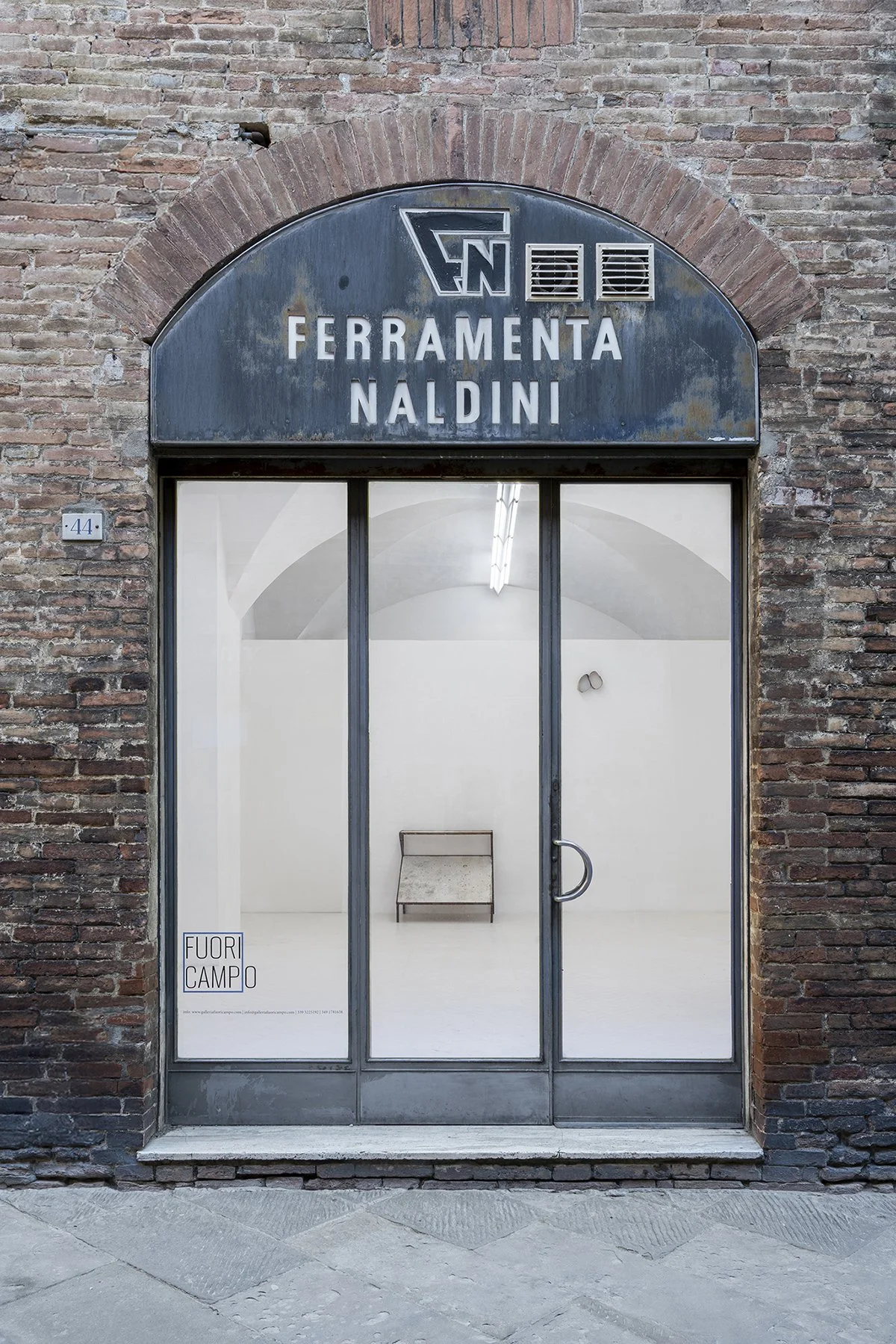
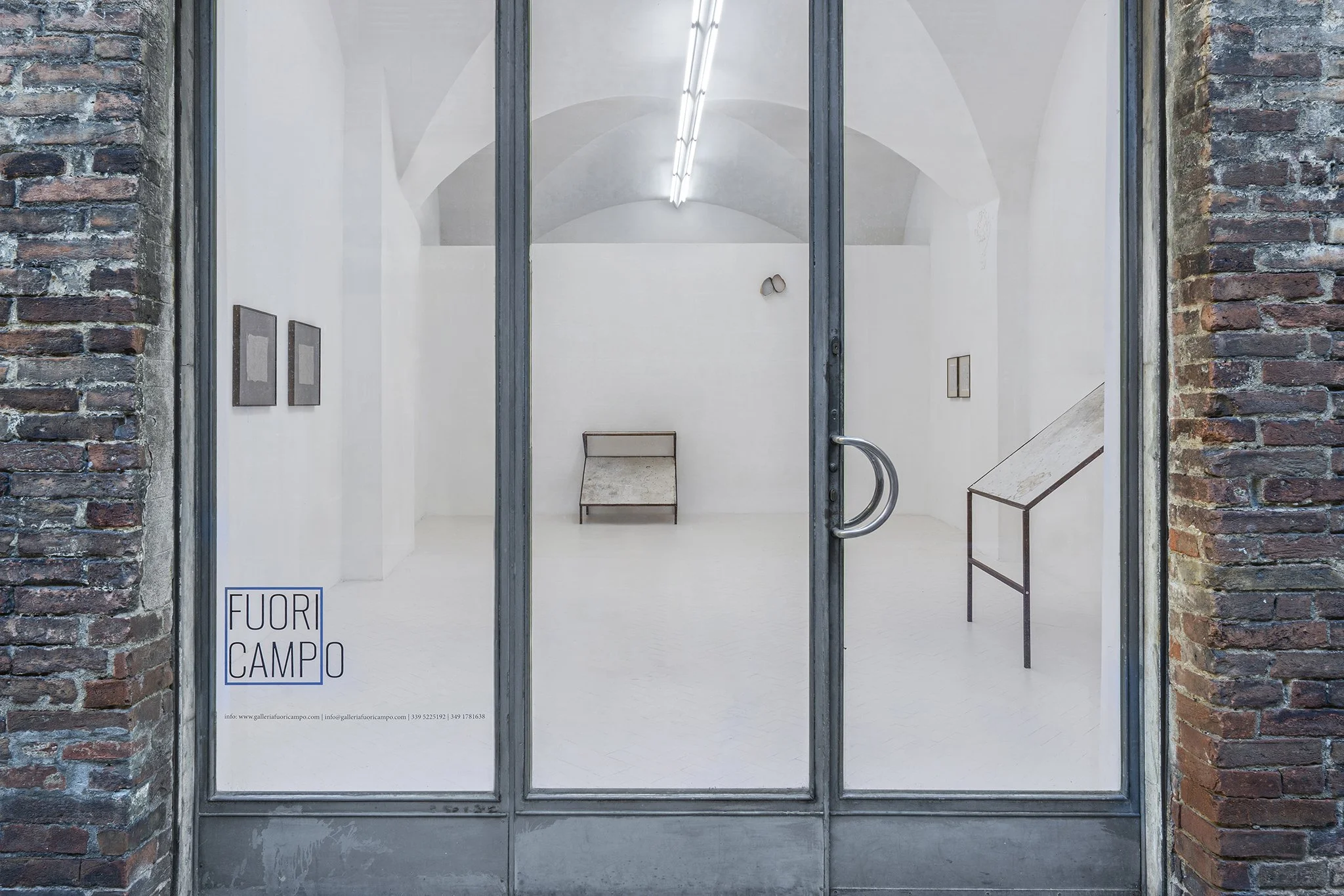
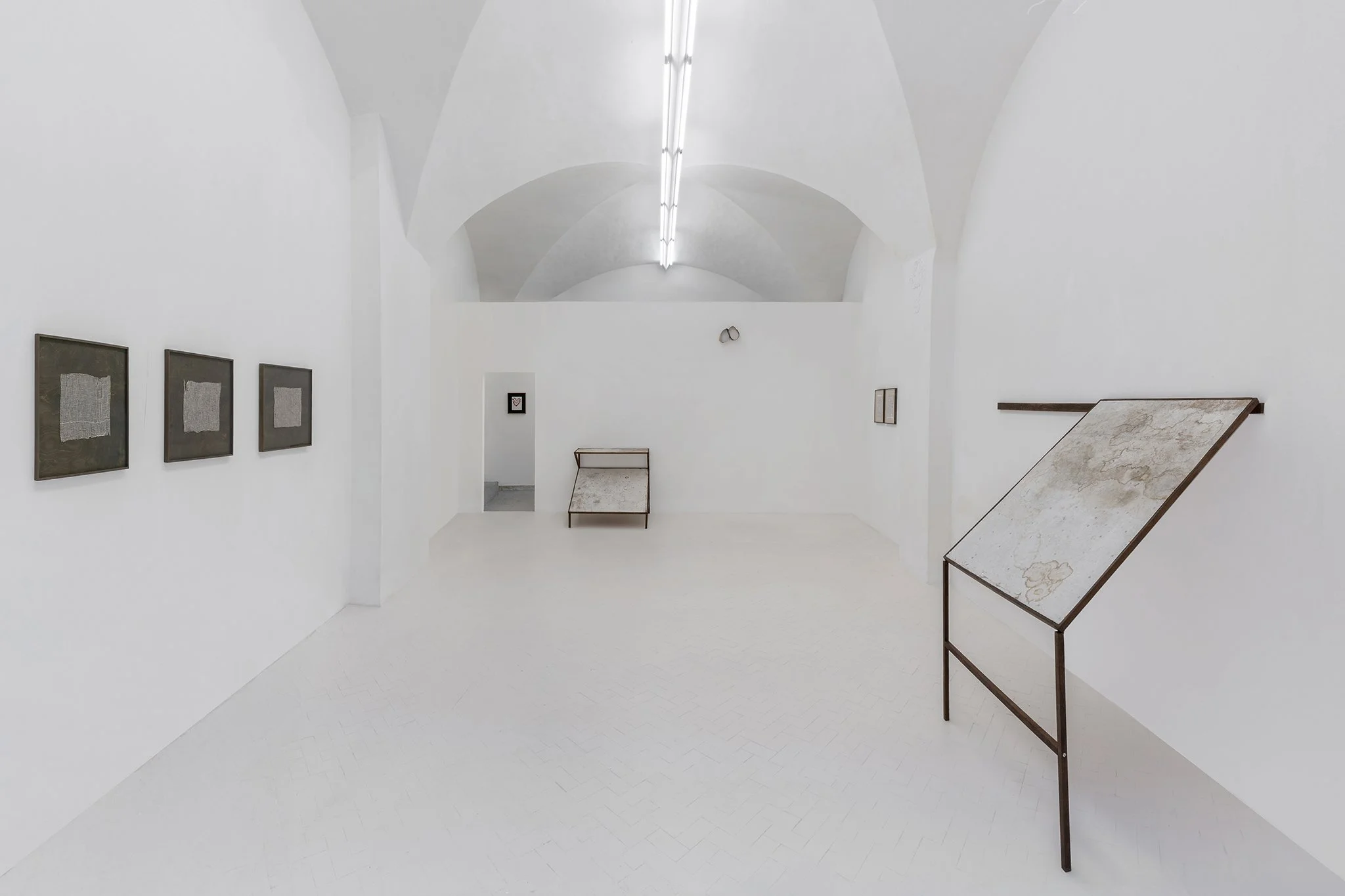
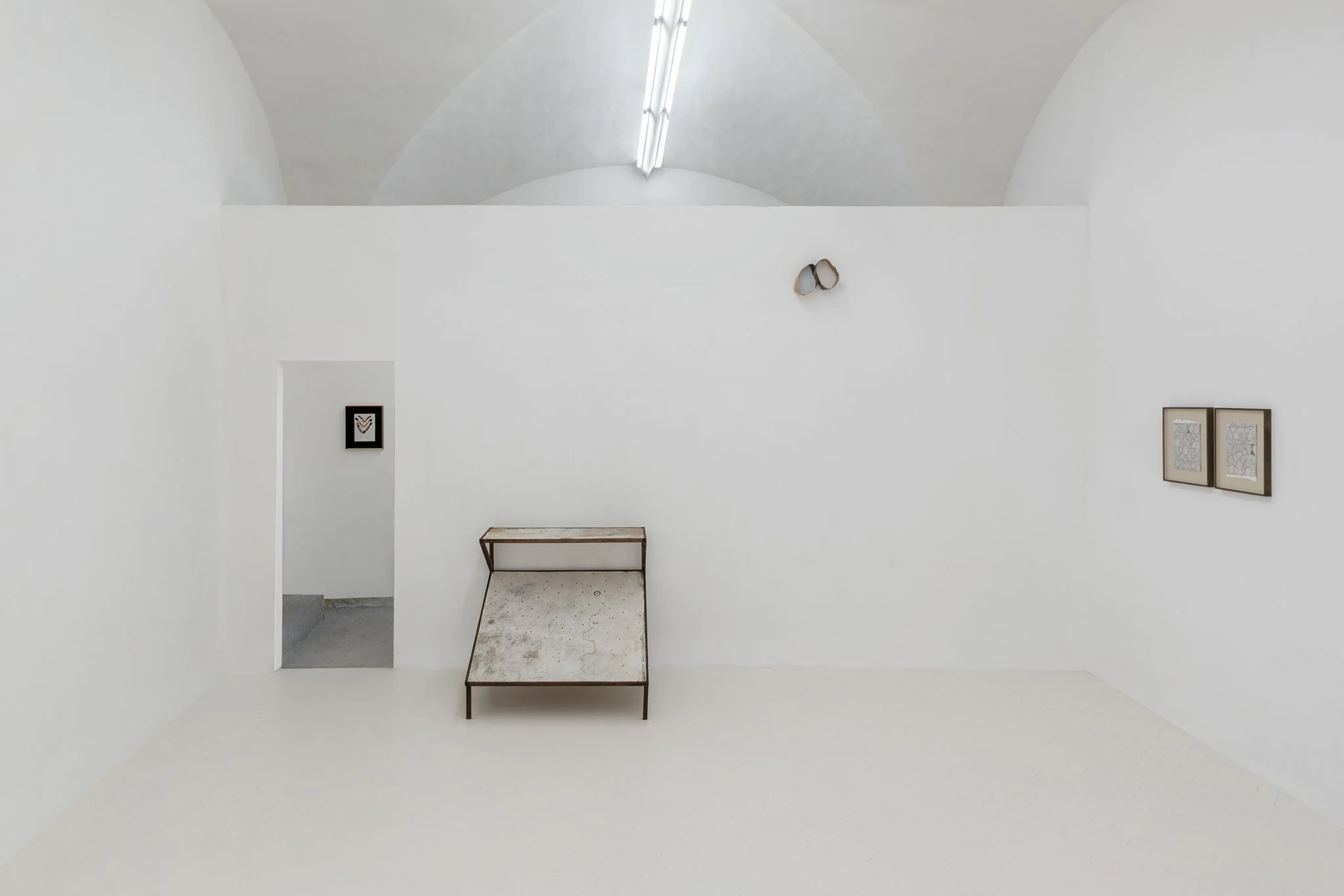
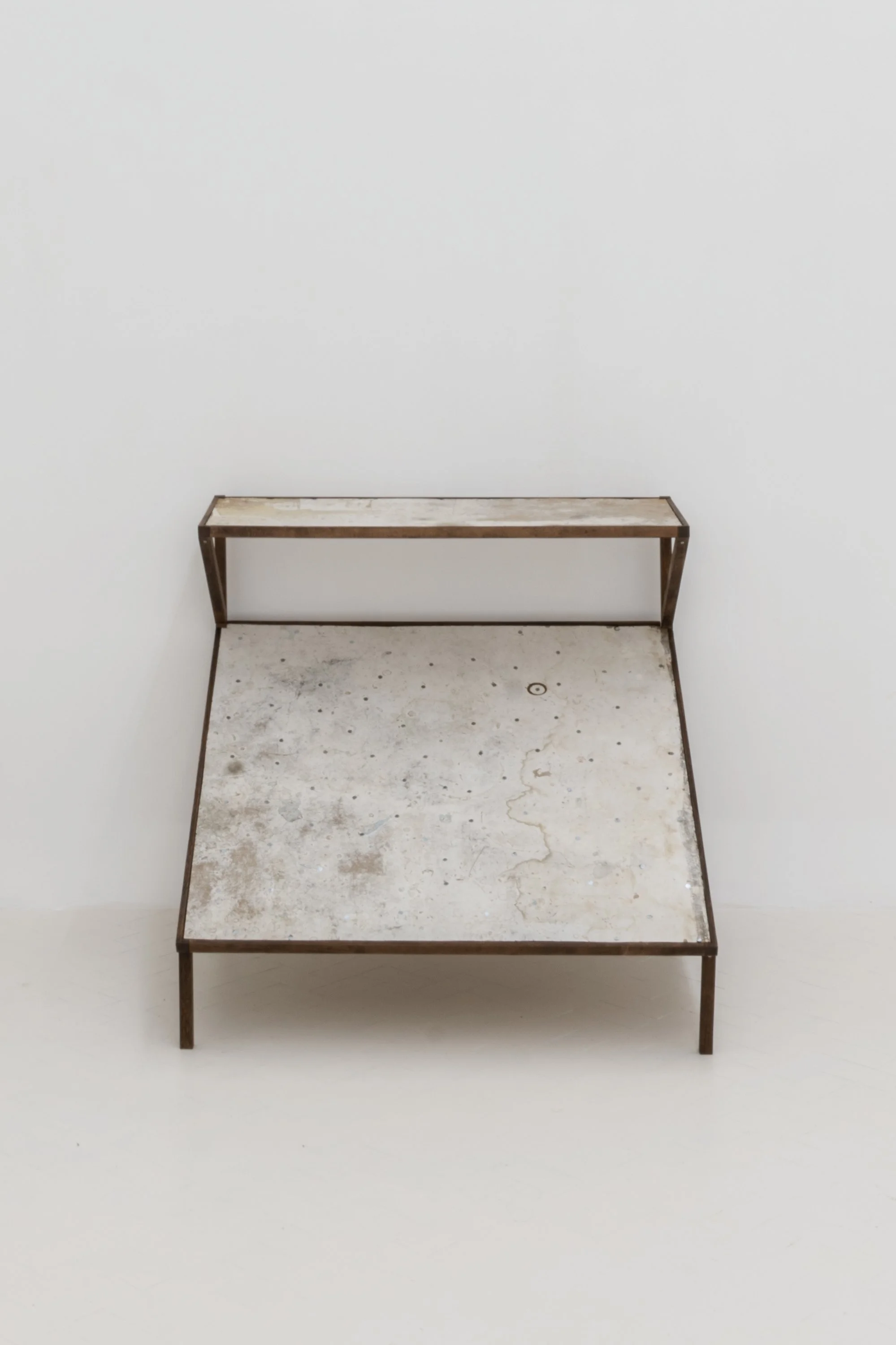
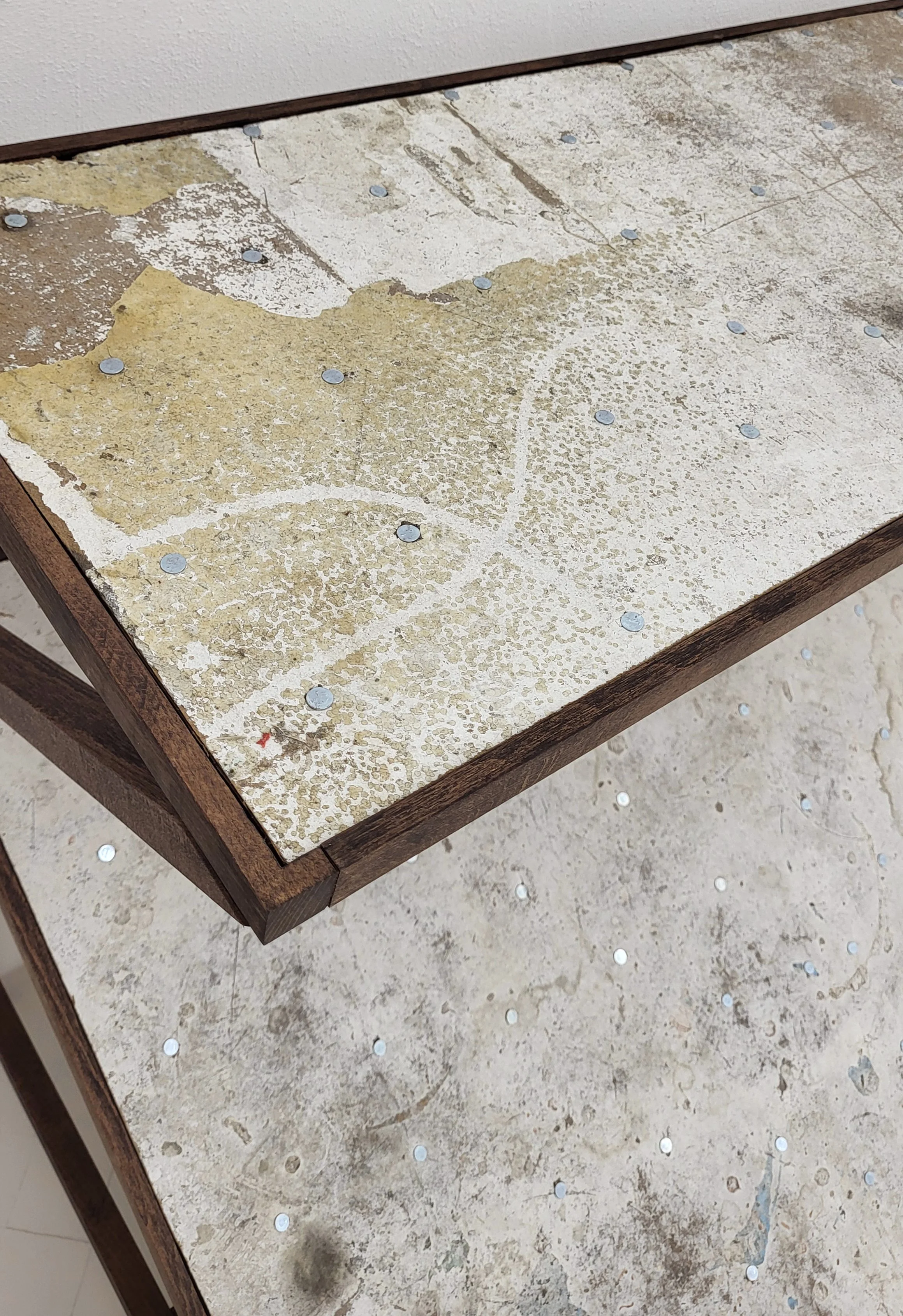
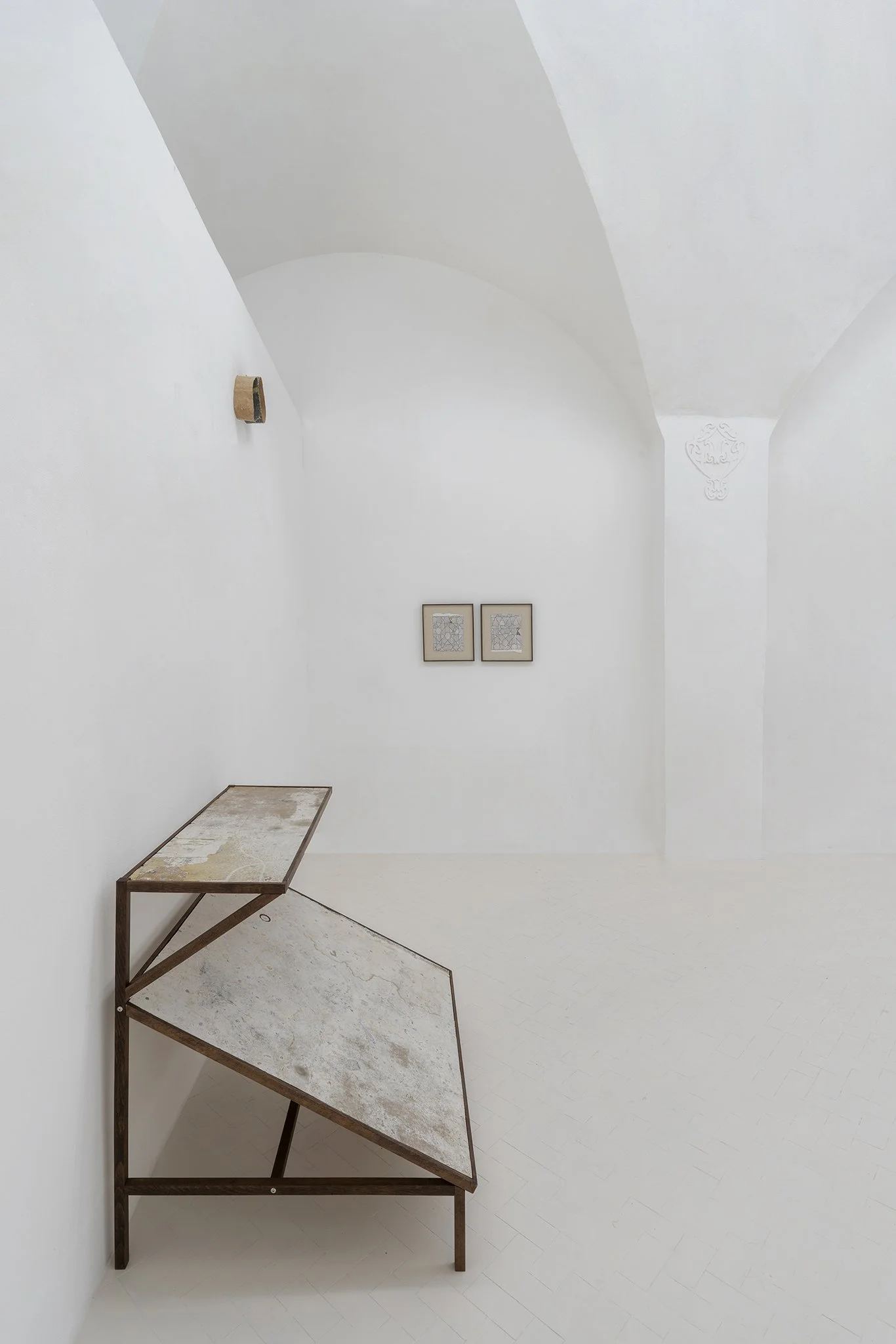
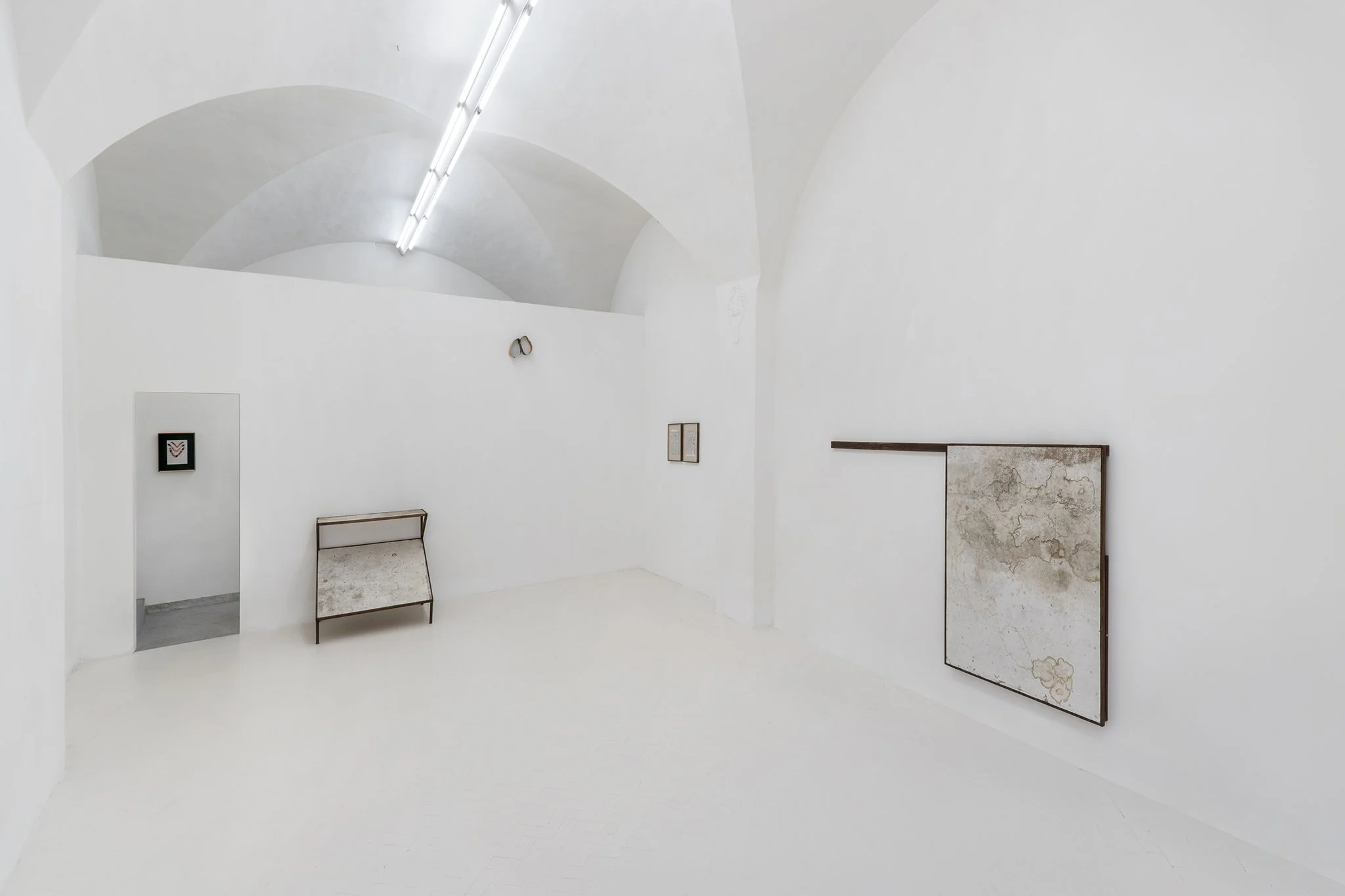
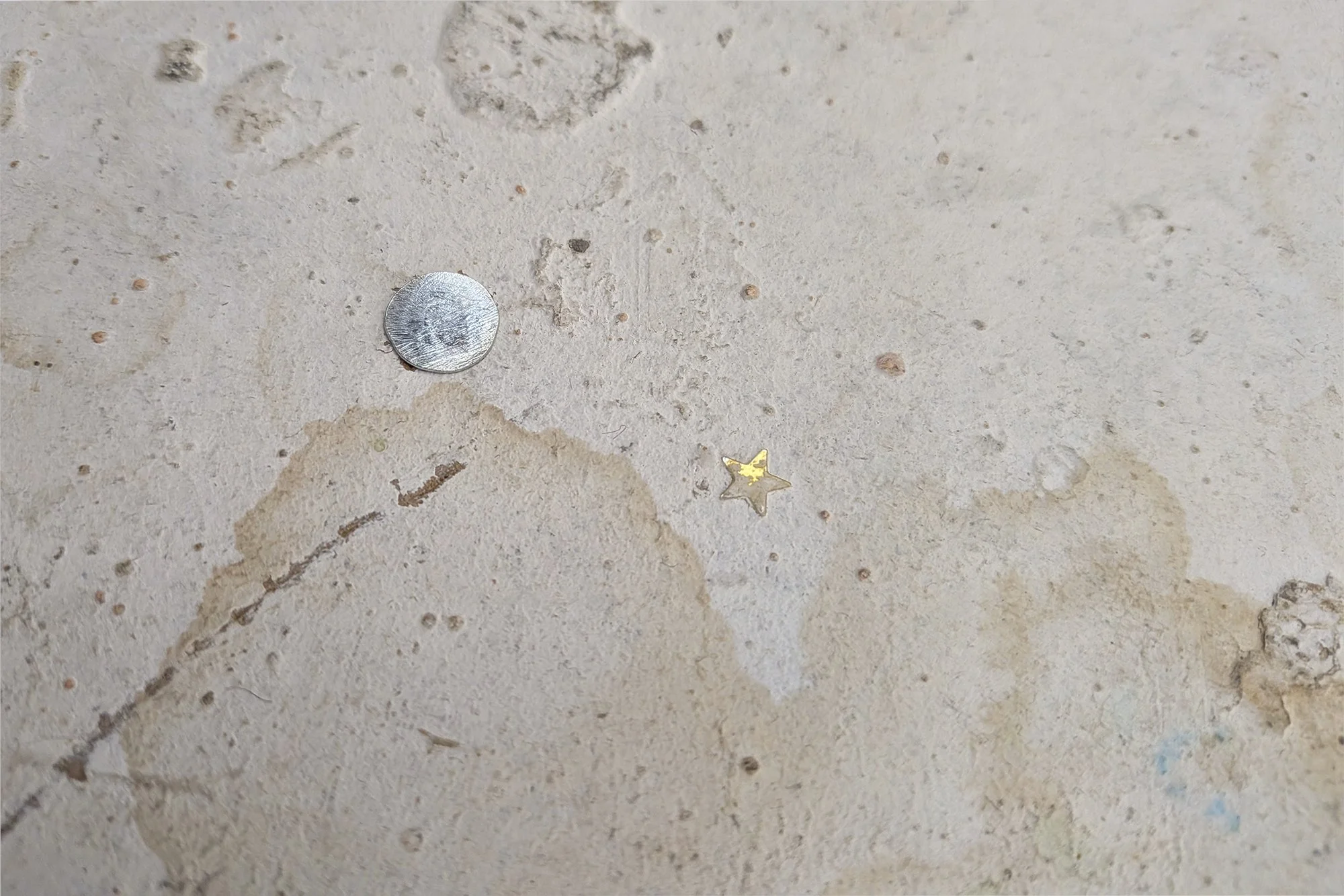
Stummer Diener, 2026 — Wood, reclaimed studio floor panels, paint, roofing nails — 92 x 100 x 82 cm
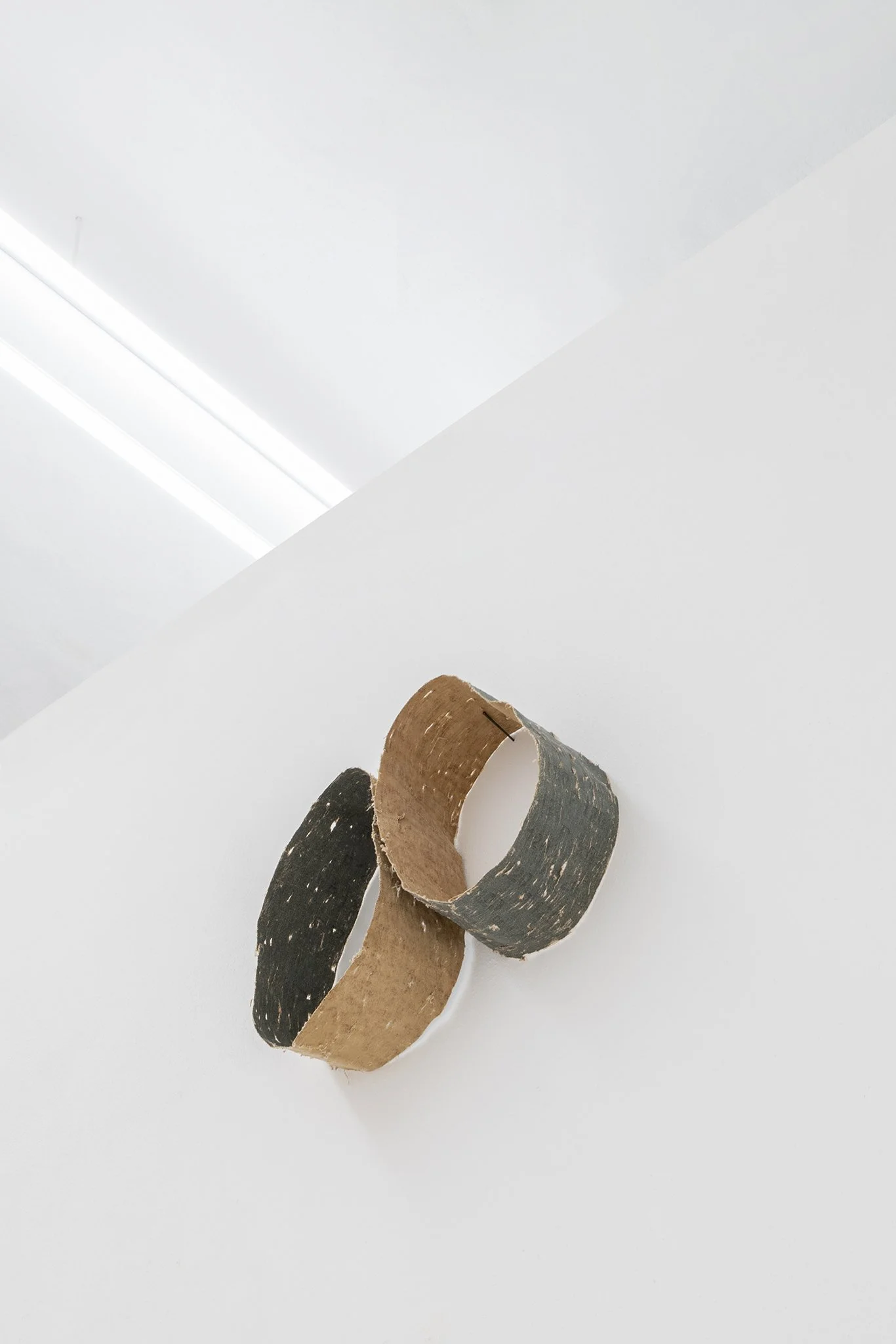
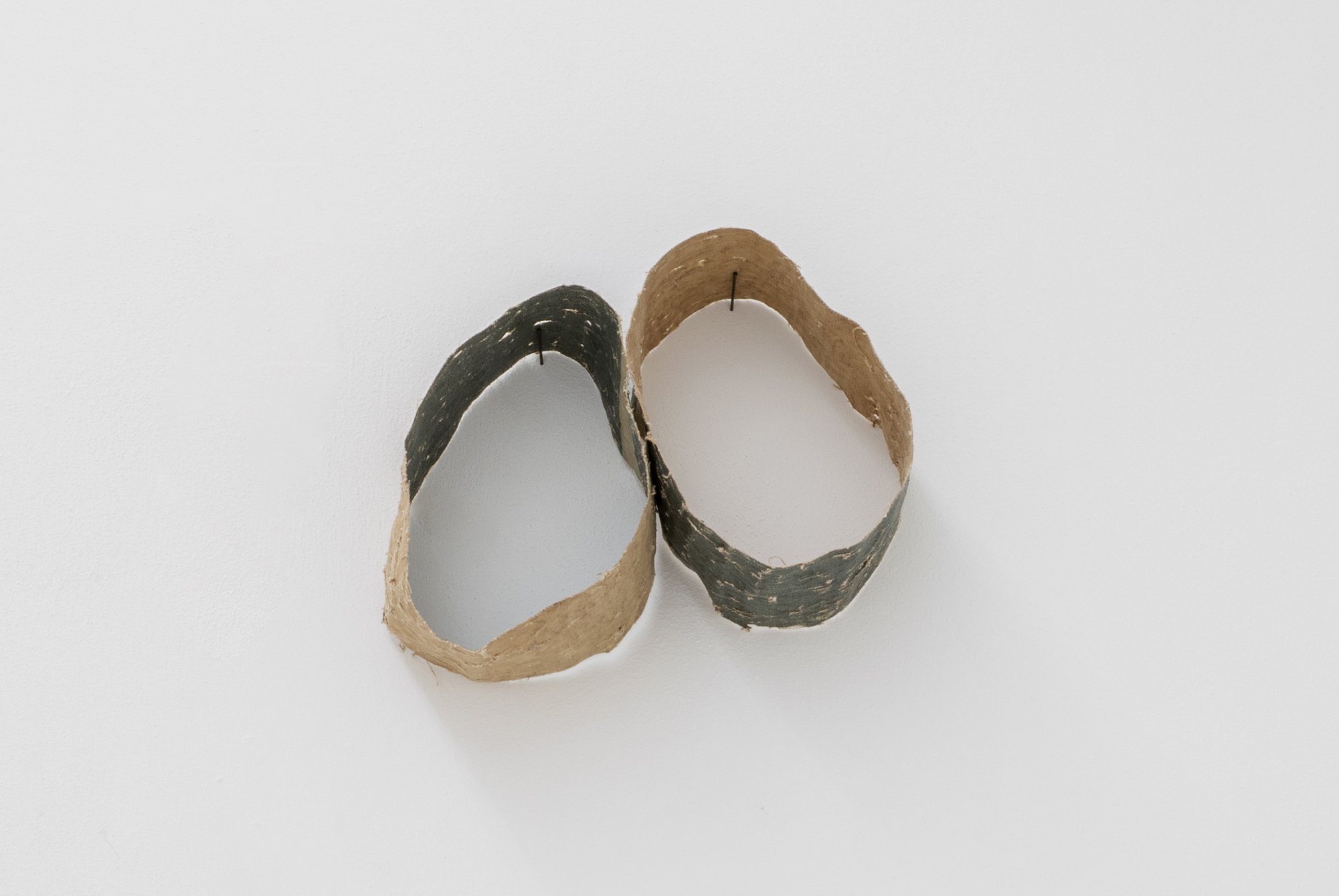
Untitled (Le baiser), 2024 — Abrasive belts — 28 x 25 x 8,5 cm
Produced as part of TAMAT’s Recherches 2024 program, with the support of the Fédération Wallonie-Bruxelles.
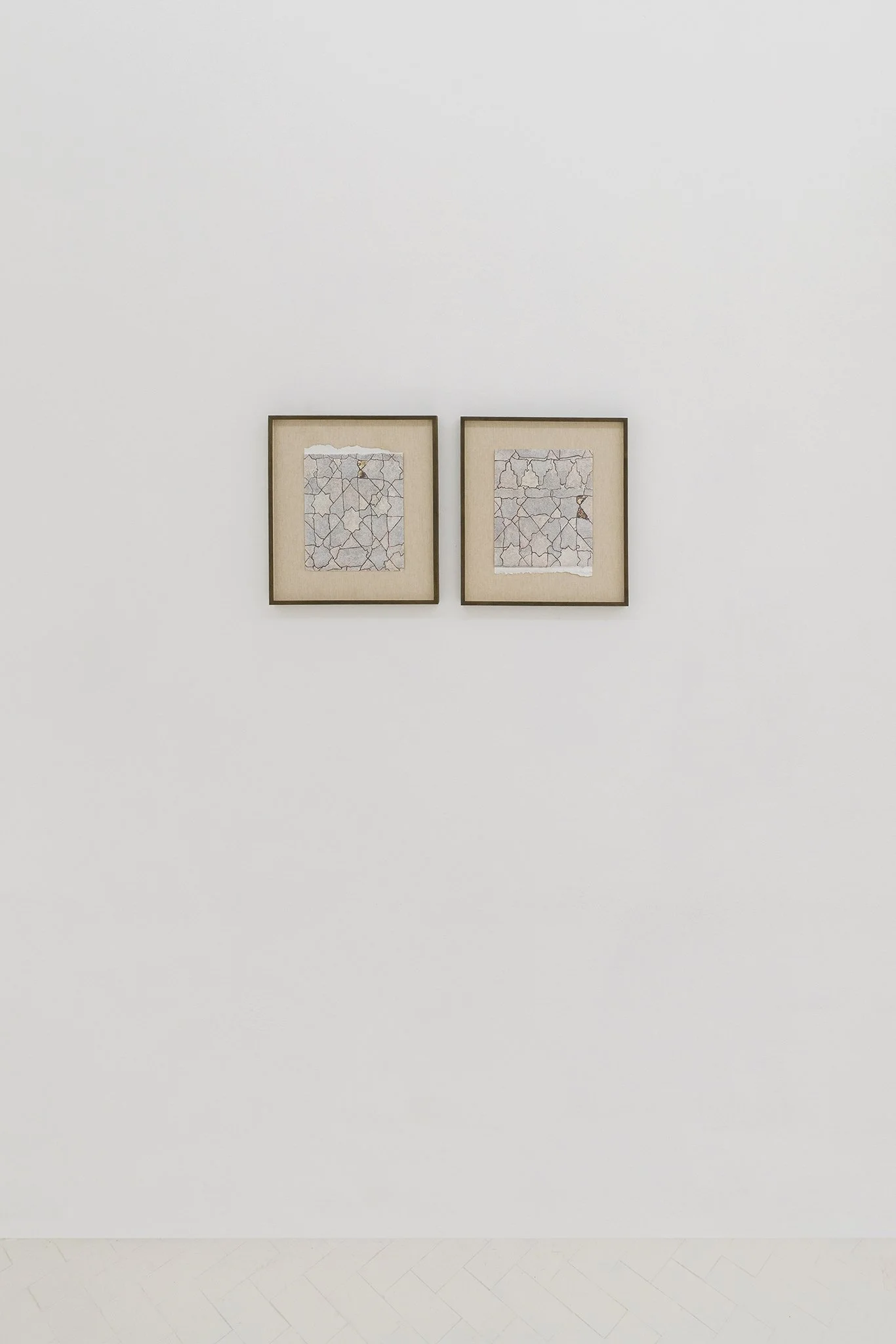
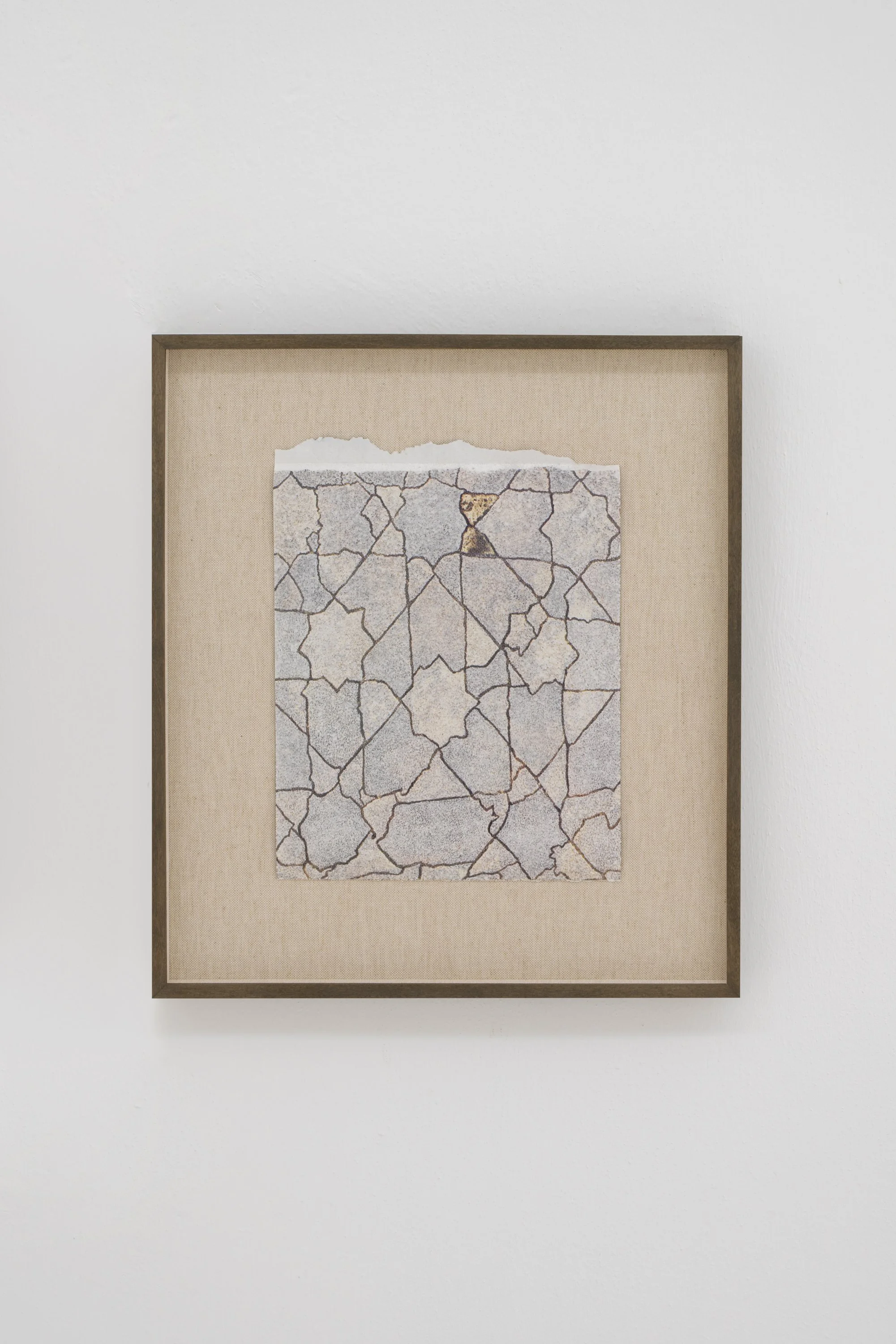
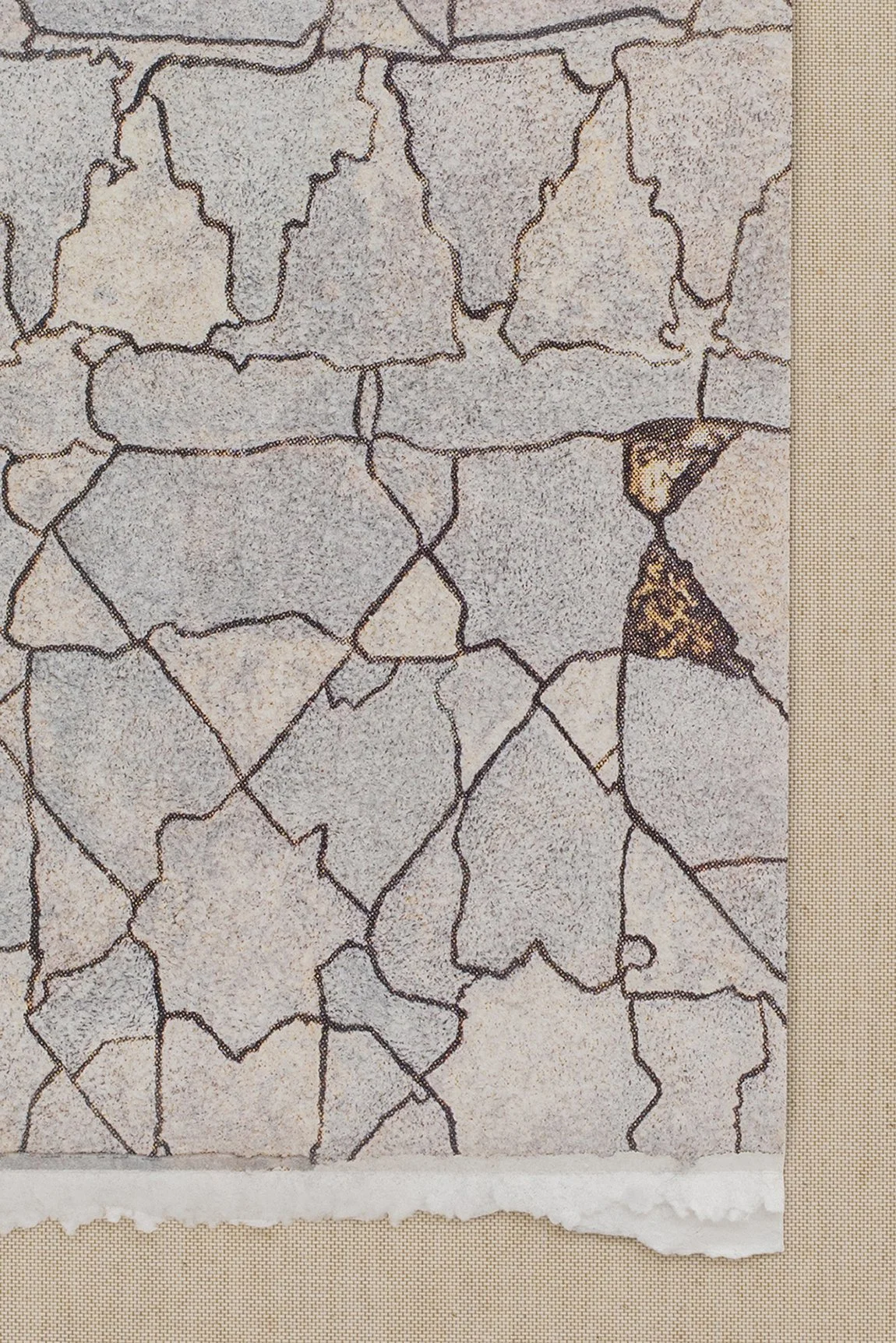
Tête-bêche, 2025 — Found book cover — 40,3 x 35,8 cm (each)
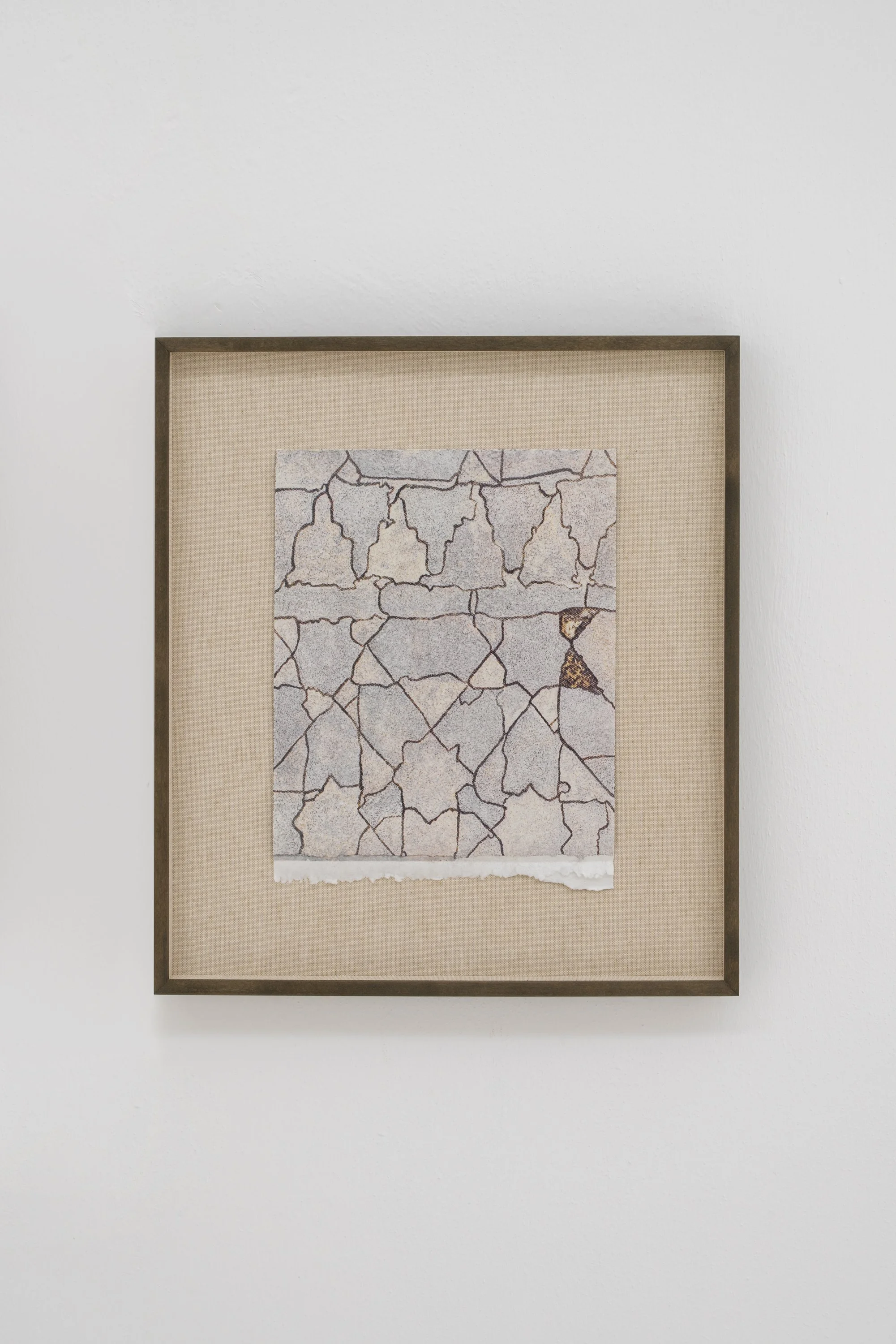
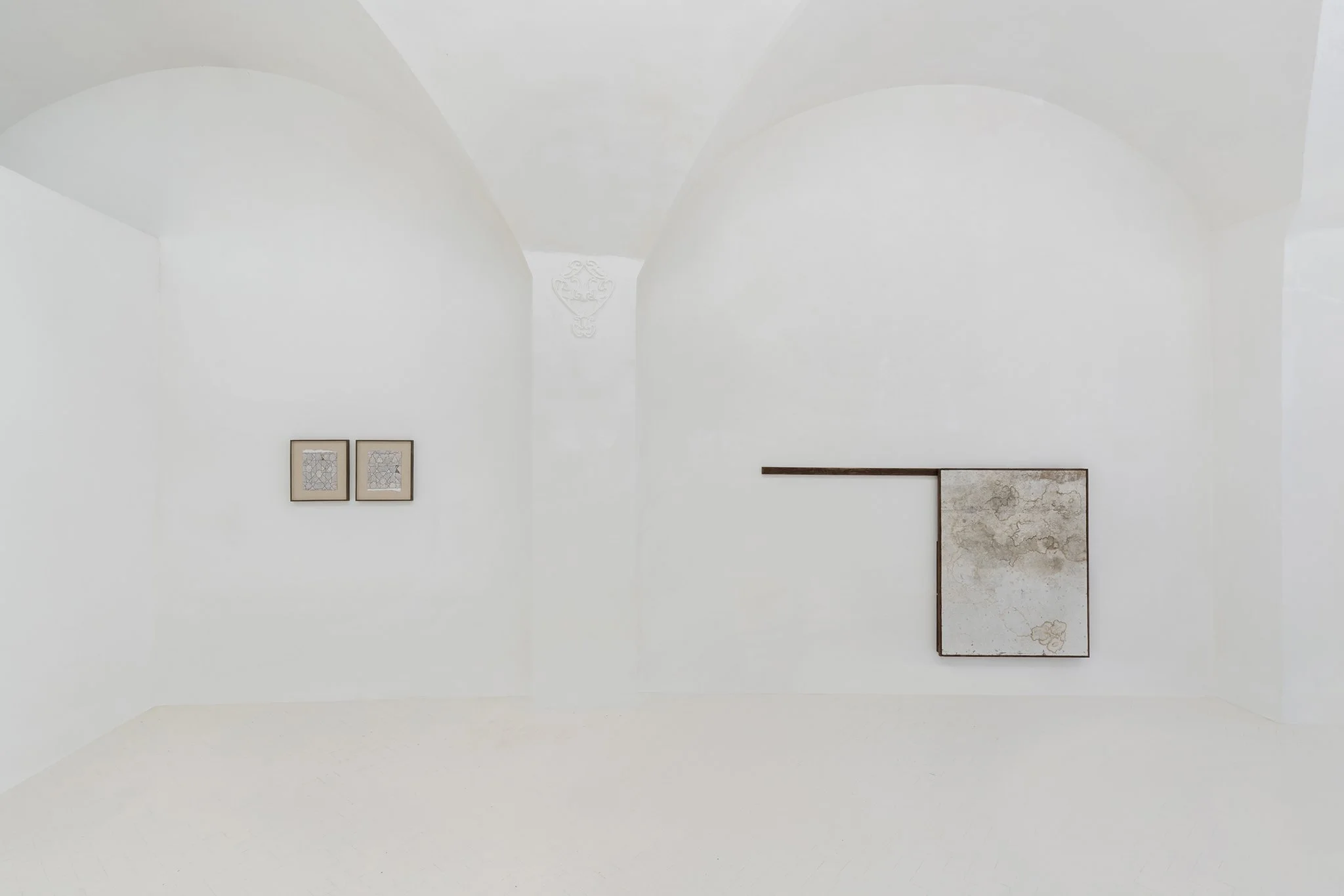
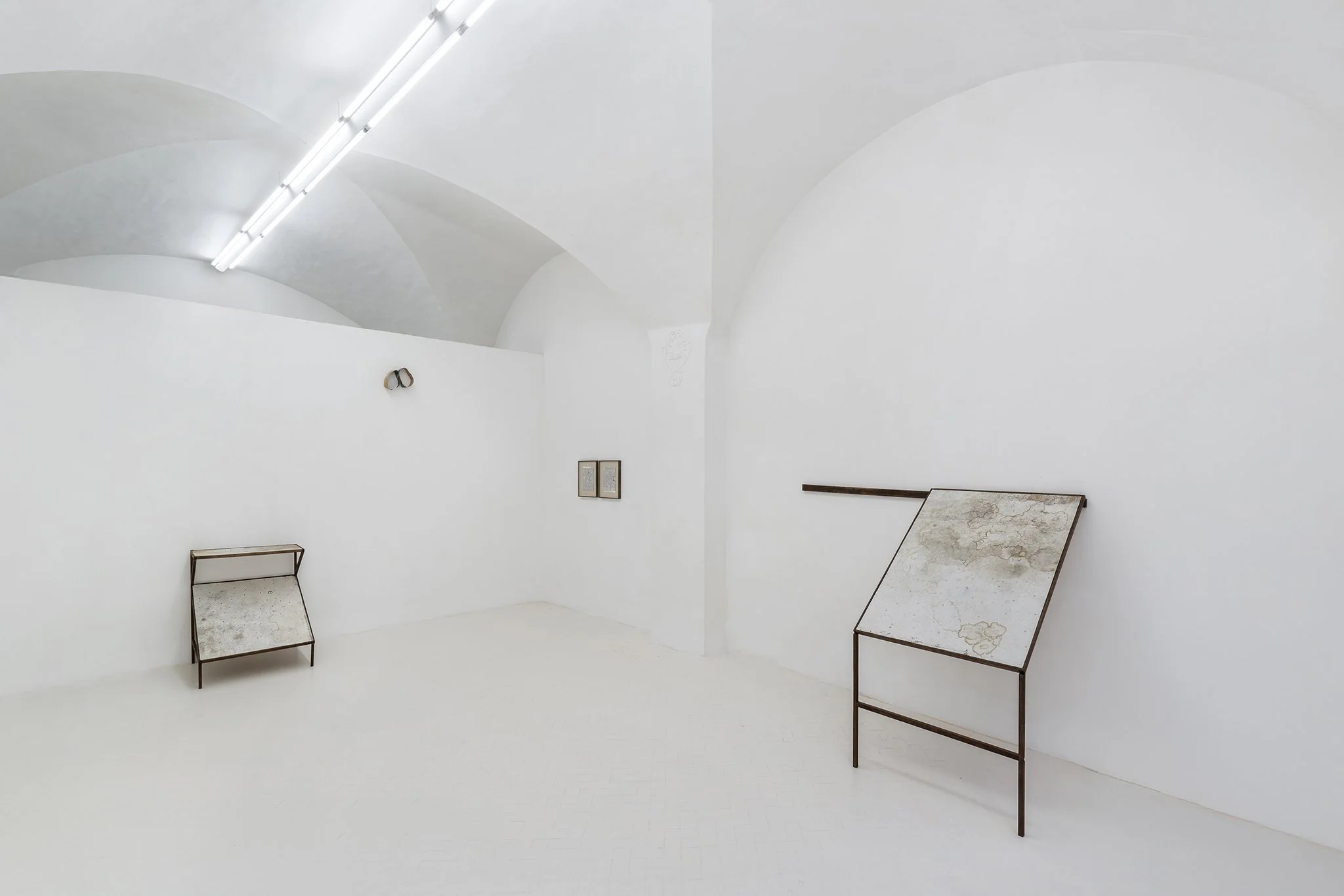
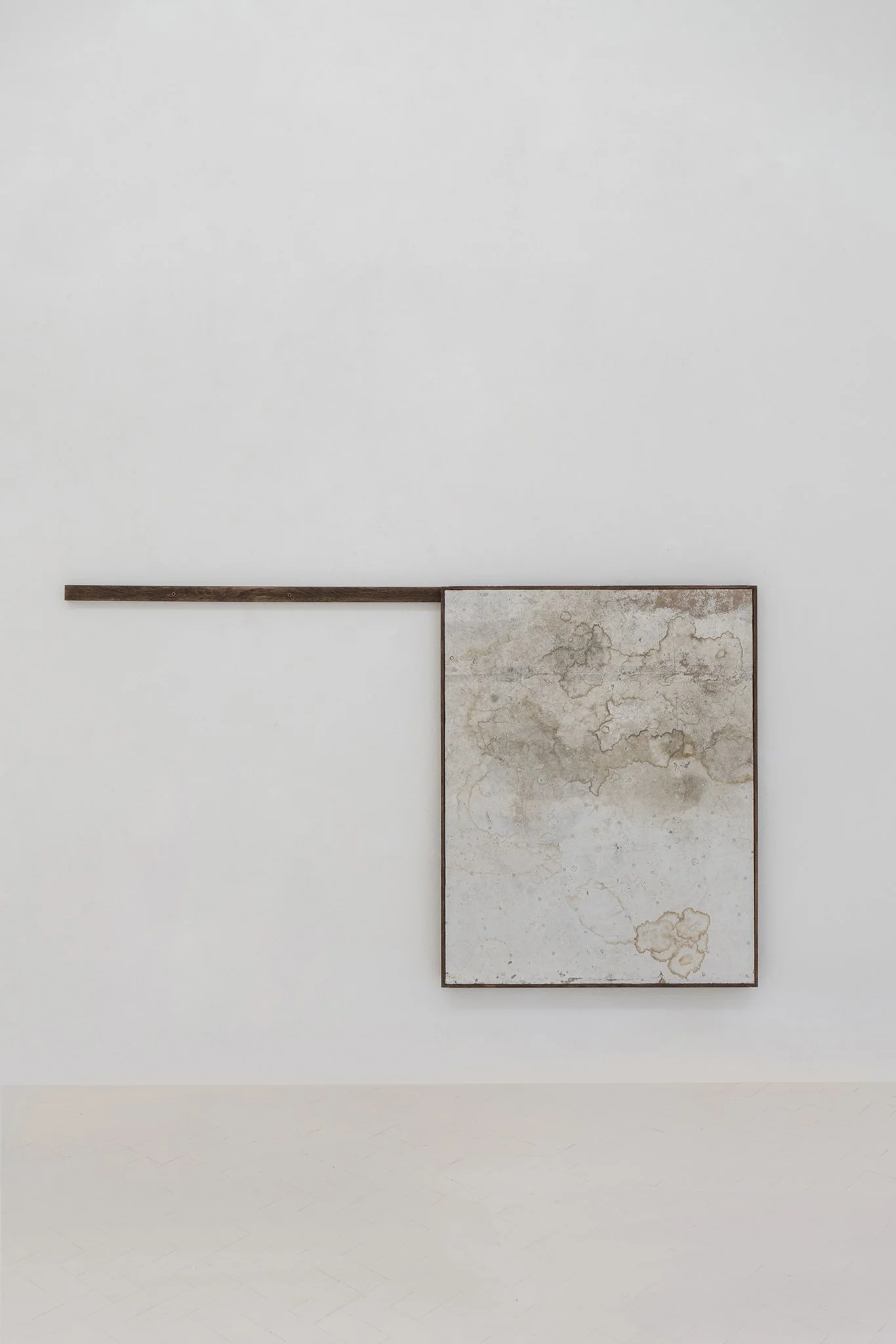
Stummer Diener, 2026 — Wood, reclaimed studio floor panels, paint, roofing nails — 127 x 220 x 5,5 cm (folded)
155 x 220 x 104 cm (unfolded)
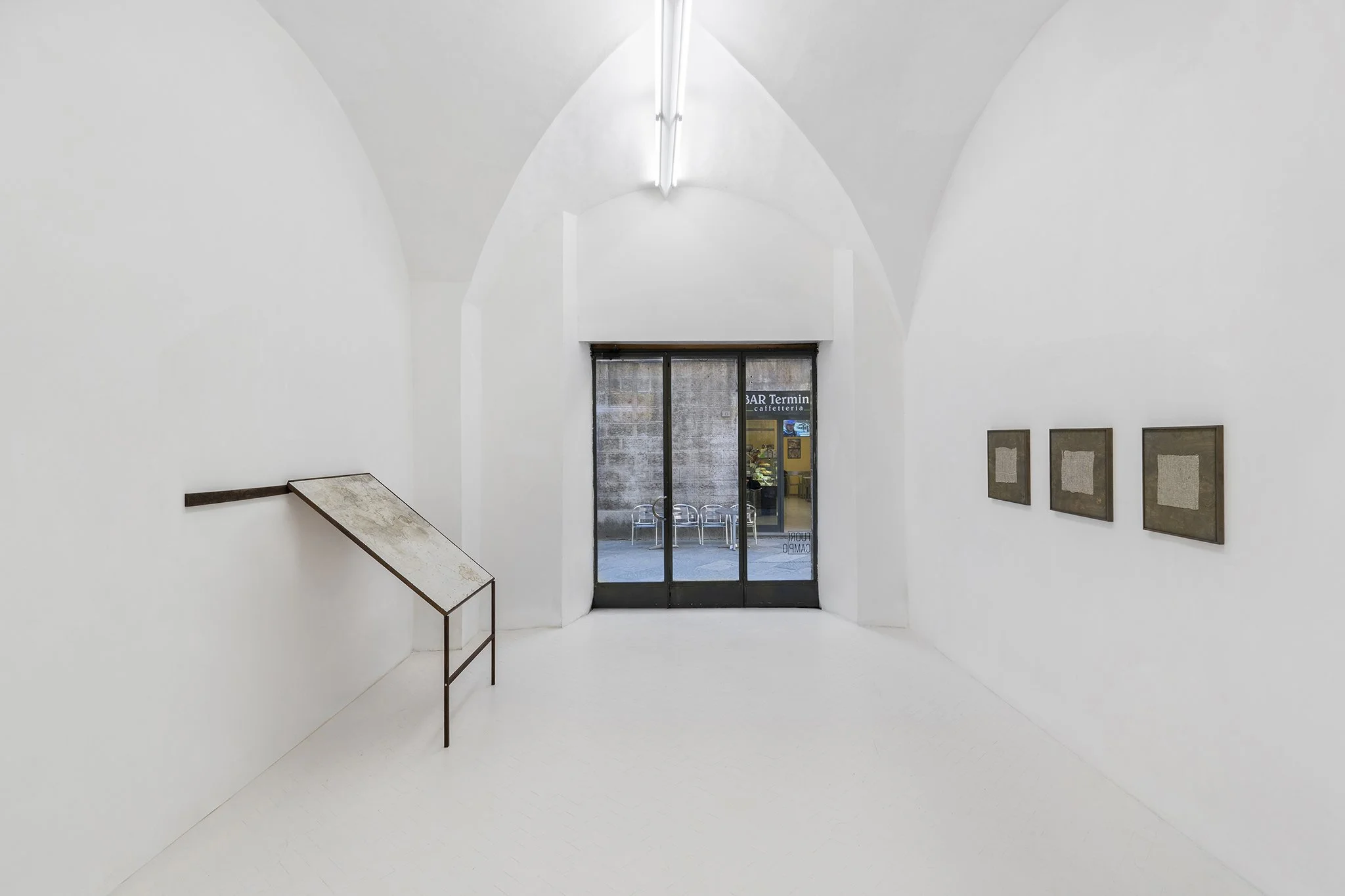
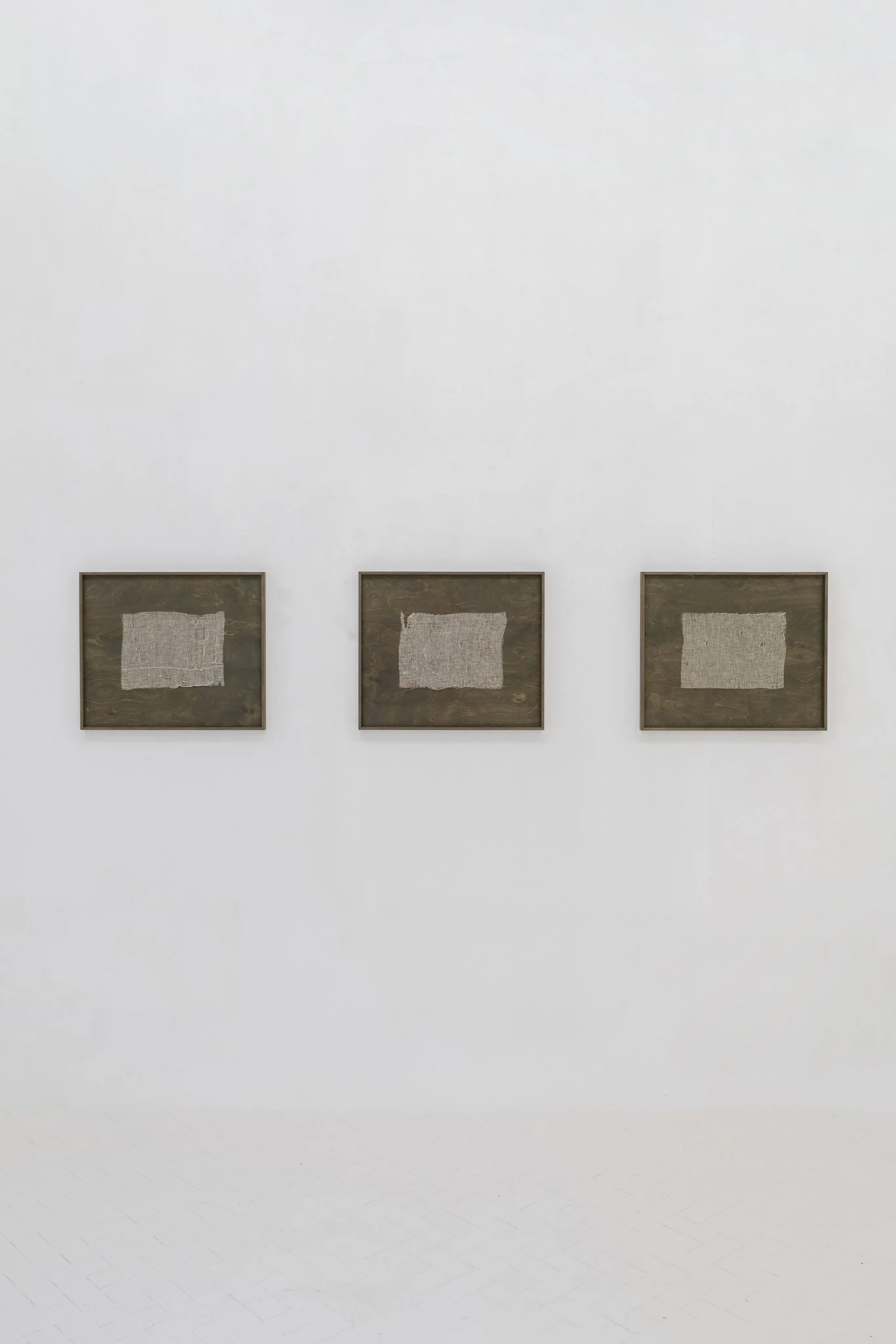
Fabric of Reality, 2025 — Interleaf canvases from a found book — 49,8 x 58,4 cm (each)
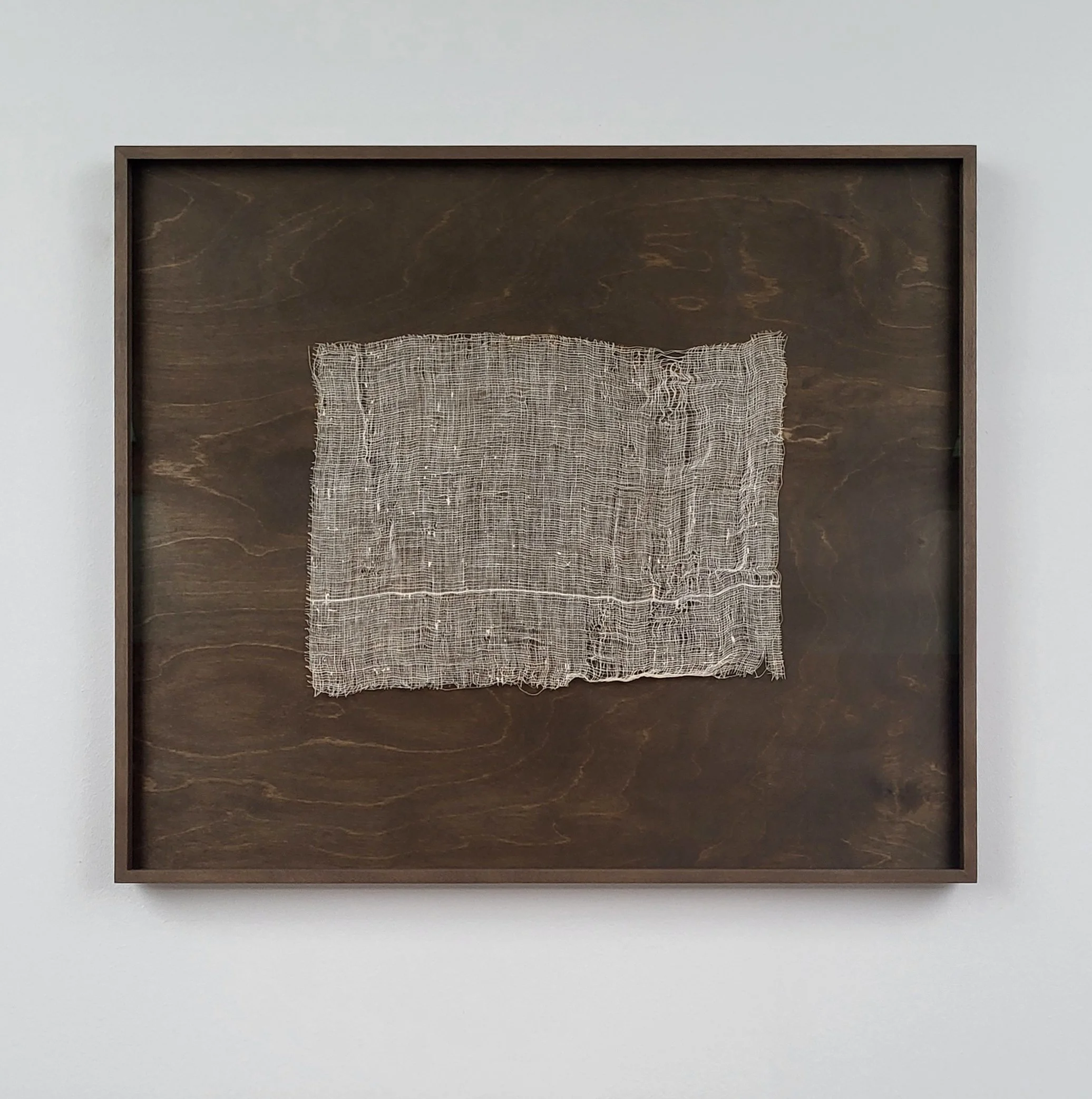
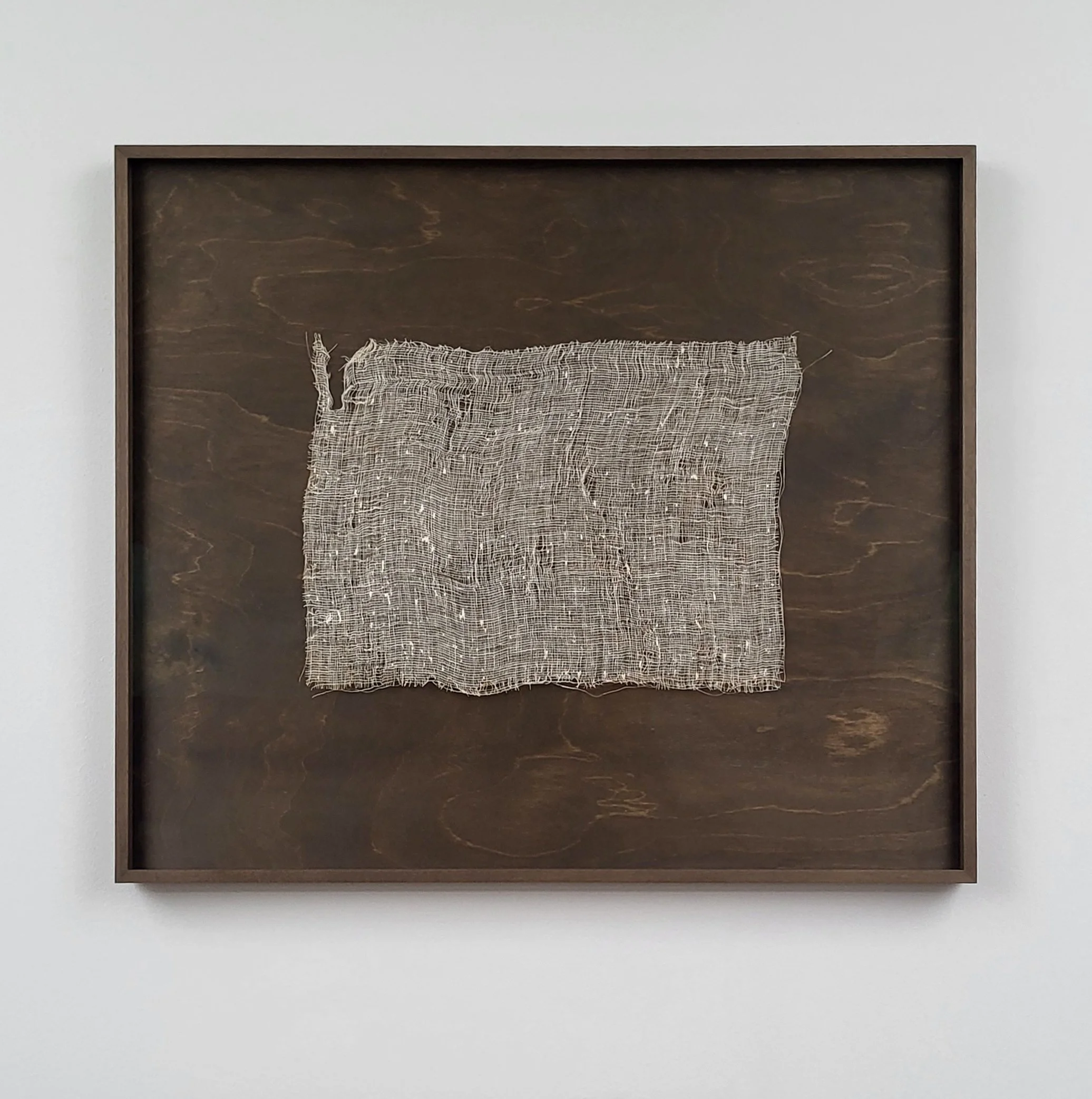
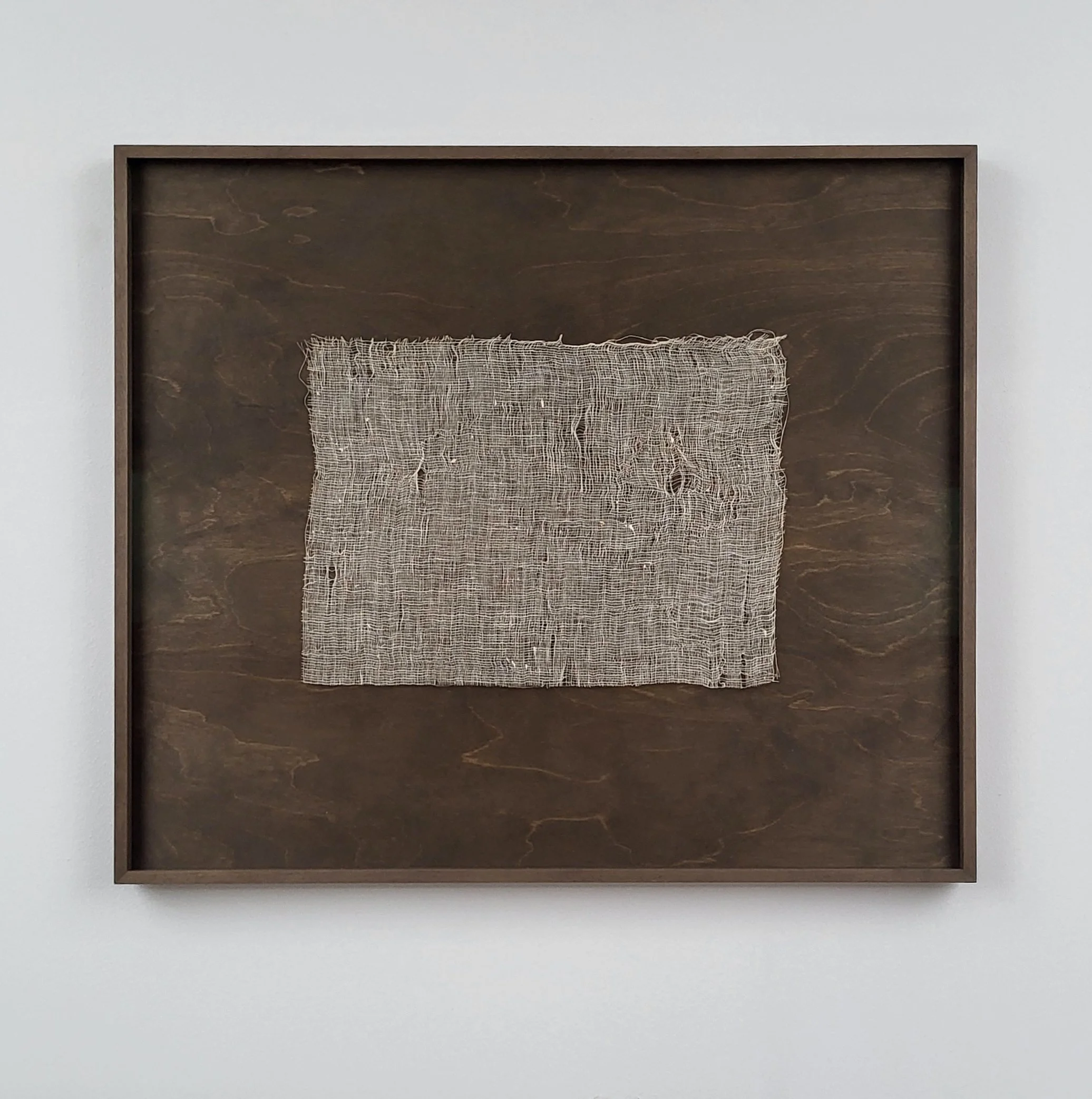
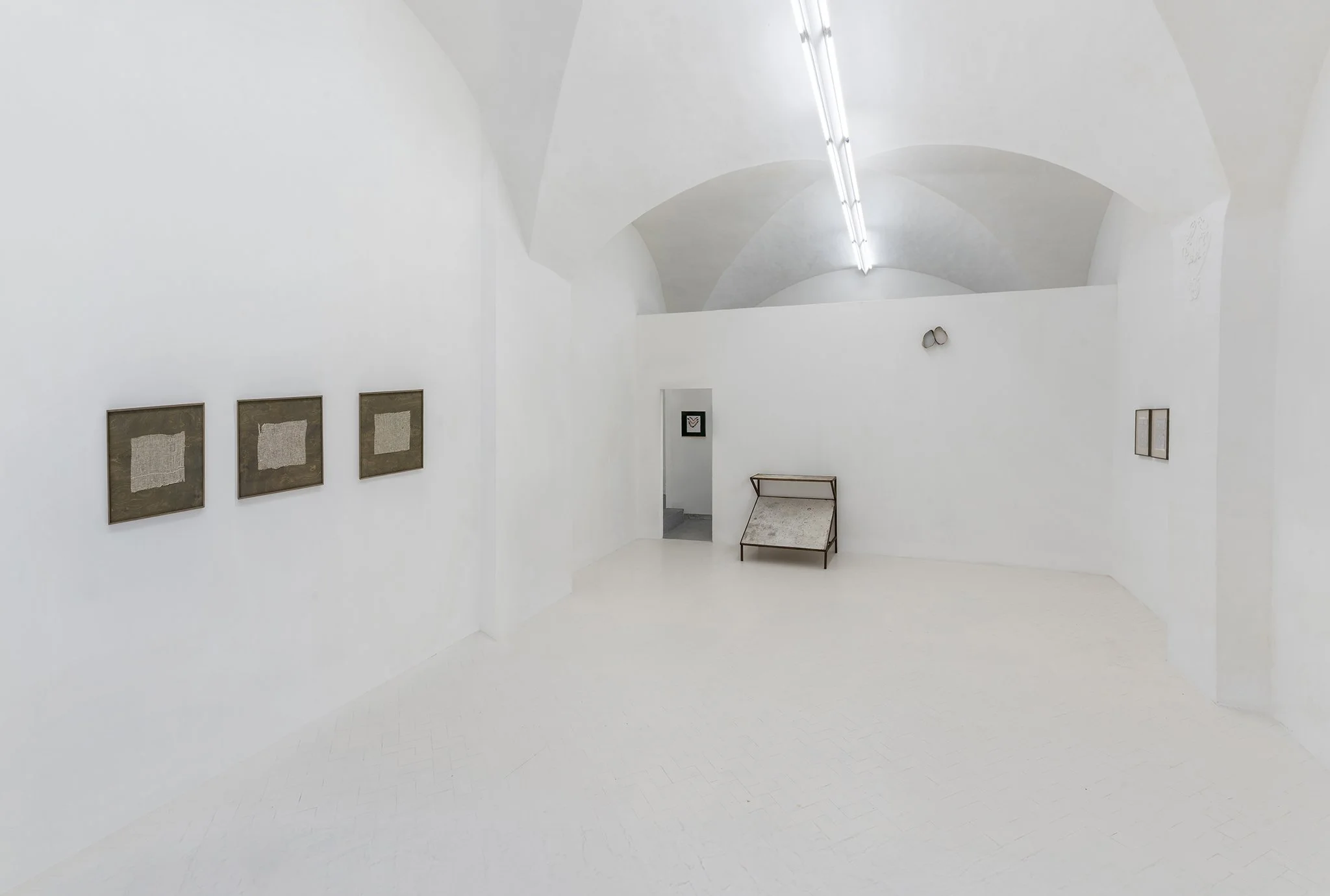
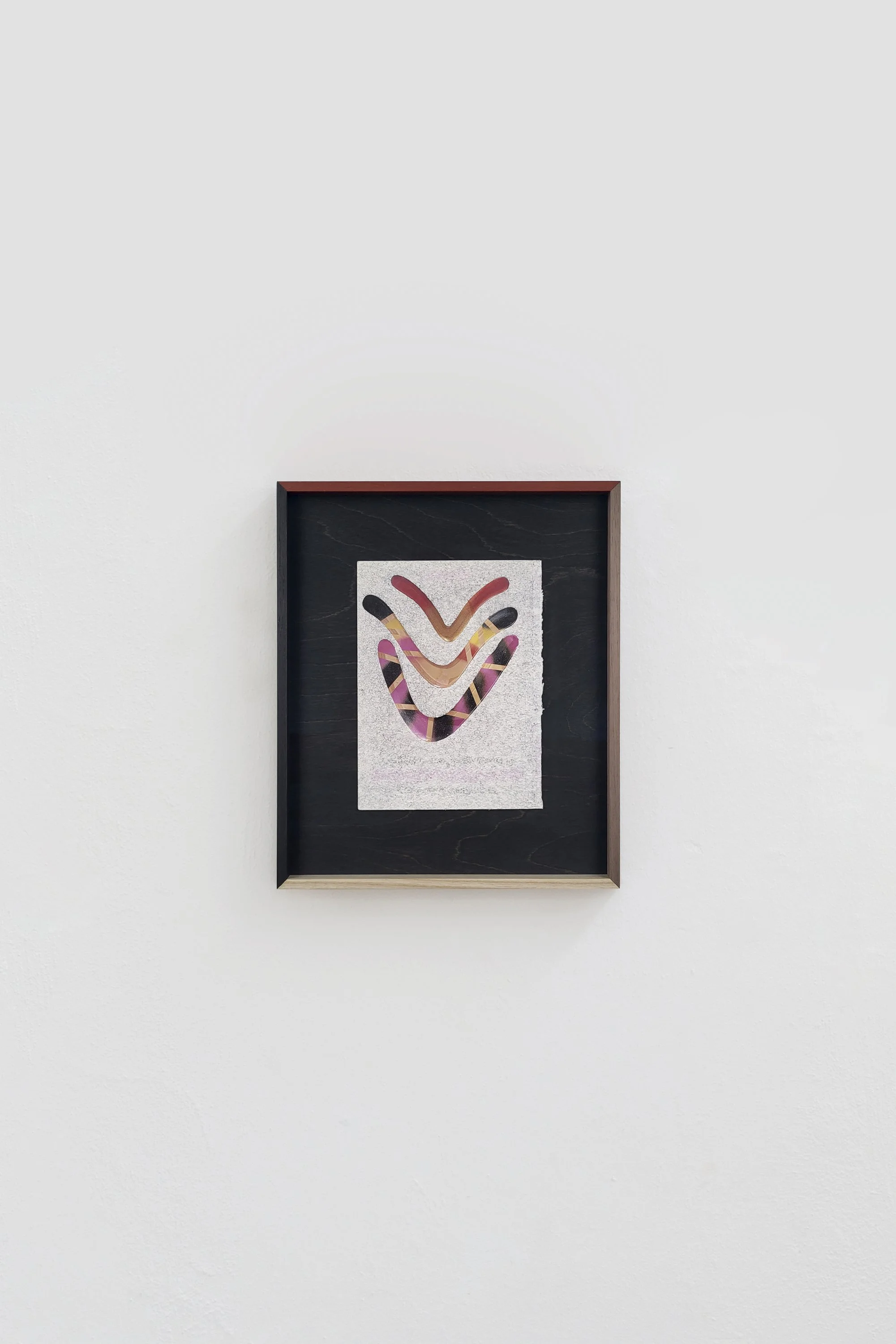
Publikum - noch stundenlang, 2025 — Found book cover — 36,7 x 30,6 cm
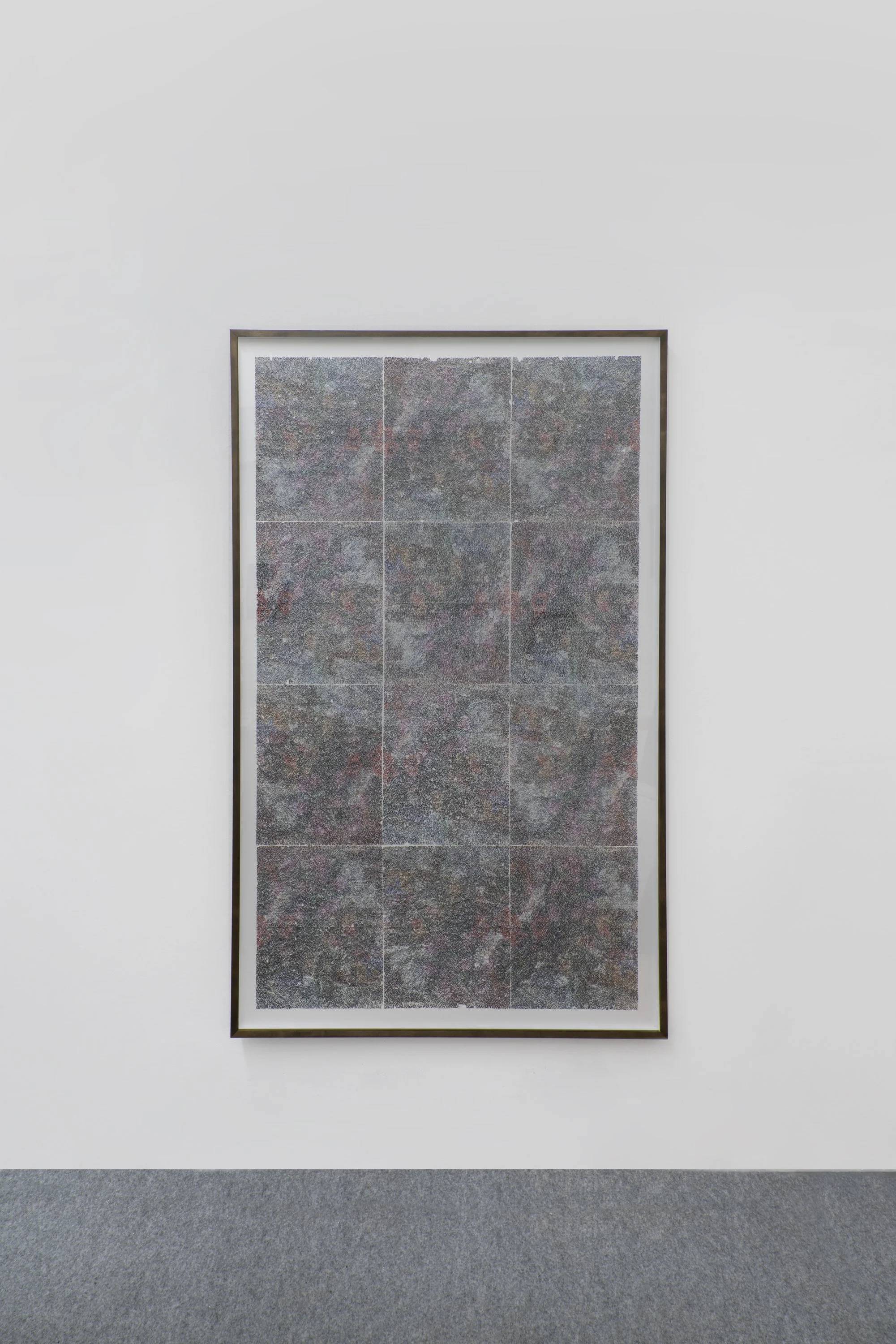
Hold the line, 2025 — Found exhibition leaflets — 171,6 x 105,6 cm
The nature of time is one of the great mysteries of reality. On one hand, time is a puzzling enigma that has eluded all of humanity’s attempts at total comprehension. On the other hand, time is the most familiar thing in the world. And while the subject has been studied for thousands of years, there remains no scientific consensus as to what time really is. Our human experience is that time is something which flows from the past to the future, and we as subjects, are carried along its progressive linear current. And yet, our physical models of time argue that the universe is one big block in which all moments past, present and future, exist somewhere permanently along the block’s temporal dimension. What’s more, the second law of thermodynamics, entropy and the “arrow of time” tell us that time, as we experience it at the human level, does not exist as such in the microphysical world: were we able to witness reality at that level, the difference between the past and the future would vanish.
And yet, despite its magnitude and mystery, we are woven into time just as it is woven into us. Our physical nature and the objects around us are marked by the truths and paradoxes of time’s passing. Embedded histories speak to use and rest, tension and potential. In a perpetual present, the artifacts of our lives hold all revolutions that have come and gone, enchanting us into the deeper truth that each moment in time contains every moment in time. In response, the human psyche traces narrative threads in an effort to make sense of the kaleidoscopic nature of reality. Meaning is carved from signals, sent by past to the future, which braid together in the present.
The work in João Freitas’s Hold the line, explores the construction of these narrative threads as they constellate into higher orders of meaning, and tie subject and object together across space and time. In this collection, themes of pattern and deviation denote the liminal space between abandon and return. Evidence of erasure and revelation rise from objects stripped of their nominal use. As the entities are remade, the information encoded within them transforms from one state to another. Grids organize themselves into networks and the ghost of liquid maps the territory it once pooled, haunting the stillness that has replaced it. Human intervention inverts upon itself: although conscious awareness witnesses the unfolding of time, time will still unfold with or without a witness.
By deconstructing his materials and working within them, Freitas engages with the building blocks of our larger reality. In a conscientious, fractalized manner, Freitas rearranges the fundamental qualities of meaning within an image or object, altering the stability of time and signification. Belts in tidal lock reveal movement, passage and infinity. Wear and abrasion testify that they, too, are a loving remembrance, and that reflective melancholy must contain a seed of contentment. These temporal shifts are not the product of re-pondering the past, but of building a new chronosophy altogether. To construct these pieces the artist used components gathered from four significant locations that have marked his life, thereby infusing the collection with yet another temporal reference point: the human lifespan. Multiple histories intersect in the present moment, which never quite completes itself, before time’s never-ending mechanism marches on.
The second law of thermodynamics states that the amount of disorder (entropy) within a system always increases and never decreases. At the human level of consciousness, we perceive this movement from order to disorder as the “arrow of time” moving from the past to the future. However, were we able to witness the teeming action of the subatomic world, we would not be able to read any defining characteristics of the past or the future into the constant movement of particles. We would simply see a succession of orders, each differently defined, like a deck of cards shuffled infinitely and stopped at random. Yet at a higher level, we see the activity of the quantum world organized into patterns, which we recognize and imbue with meaning. Similarly, the pieces in this collection tell one story when contemplated alone and another when considered in concert. In Hold the line, Freitas invites a continuous temporal reorientation, conjuring a different entropic order with each viewing. This process allows the pieces themselves, and the relationships between them, to become environments—fields of time in which the future and the past move ever closer, creating linearity from non-linearity. We reach for the lines created by their connection, affix our sense of Self and memory upon them, and hold tight as time shifts once more.
— LD Deutsch
LD Deutsch (b. 1988) is a writer and lecture based in Los Angeles, California. Her work focuses on time, consciousness, technology, mythology and the fall of the materialist paradigm. Her first book, Time, Myth and Matter: Essays on the Natures and Narratives of Reality, was published in May 2025 by Sacred Bones Books.